
Introduction
South India is known for its rich spiritual heritage and magnificent temple architecture. The ancient temples in South India are not just places of worship but timeless symbols of history, devotion, and artistic excellence. Built centuries ago, these temples continue to stand strong, attracting devotees, historians, and travelers from around the world.
From Tamil Nadu and Karnataka to Andhra Pradesh and Kerala, South India is home to thousands of ancient temples that reflect deep-rooted traditions and advanced architectural knowledge. These temples played a major role in shaping Indian culture and spiritual life.
This blog explores the history, architecture, and significance of ancient temples in South India, helping you understand why they are considered cultural treasures.
Why South India Is Home to Ancient Temples
South India has been ruled by powerful dynasties such as the Cholas, Pallavas, Hoysalas, and Vijayanagara Empire, all of whom were great patrons of temple construction.
These rulers built temples not only for religious purposes but also as:
- Cultural centers
- Educational hubs
- Economic and social gathering places
The warm climate, availability of stone, and strong devotional traditions helped preserve these temples over centuries.
History of Ancient Temples in South India
The history of South Indian temples dates back more than 1,500 years. Many temples were constructed between the 6th and 13th centuries, during the peak of Dravidian temple architecture.
These temples were often built in stages, with successive rulers adding halls, towers, and sculptures. Inscriptions found on temple walls provide valuable information about ancient society, language, administration, and religious practices.
Famous Ancient Temples in South India
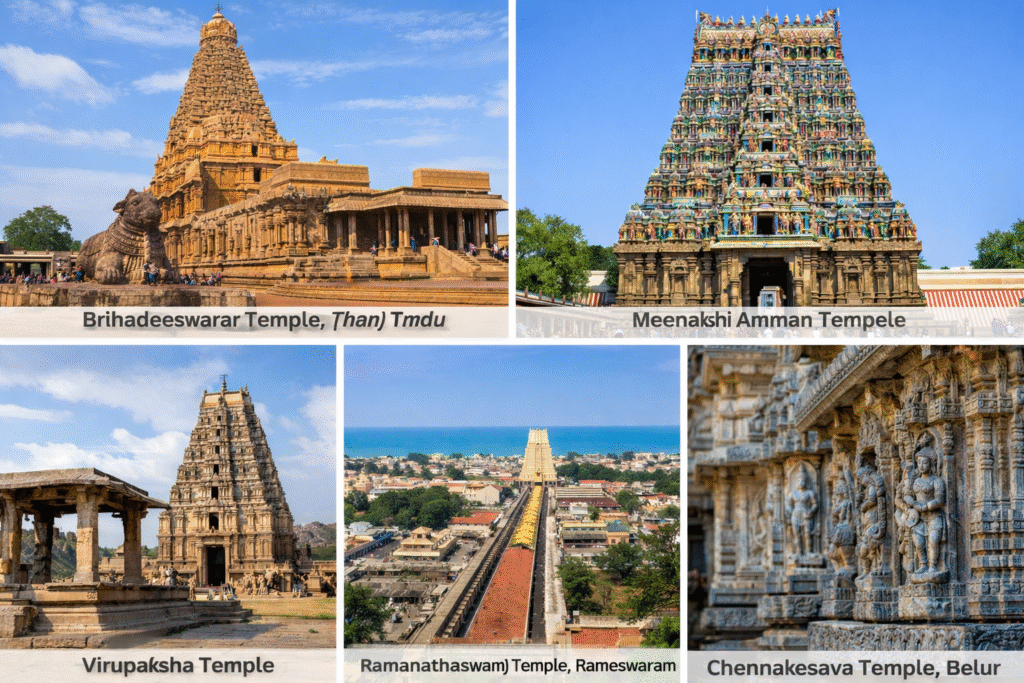
Brihadeeswarar Temple, Tamil Nadu
Built by Raja Raja Chola I in the 11th century, the Brihadeeswarar Temple in Thanjavur is a UNESCO World Heritage Site. It is famous for its massive granite structure and towering vimana, which stands as a marvel of ancient engineering.
Meenakshi Amman Temple, Madurai
The Meenakshi Amman Temple is one of the most iconic ancient South Indian temples. Dedicated to Goddess Meenakshi and Lord Sundareswarar, it is known for its colorful gopurams, intricate sculptures, and vibrant festivals.
Virupaksha Temple, Hampi
Located in the ruins of Hampi, the Virupaksha Temple dates back to the 7th century. It is one of the oldest functioning temples in India and reflects the grandeur of the Vijayanagara Empire.
Ramanathaswamy Temple, Rameswaram
This temple is famous for having the longest temple corridor in the world. Ramanathaswamy Temple is one of the twelve Jyotirlinga temples of Lord Shiva and holds immense spiritual significance.
Chennakesava Temple, Belur
Built by the Hoysala dynasty, the Chennakesava Temple is known for its detailed stone carvings that depict stories from Hindu mythology. The craftsmanship of this temple is considered one of the finest in India.
Unique Architecture of South Indian Temples
South Indian temples follow Dravidian architecture, which has distinct features:
- Tall gateway towers (gopurams)
- Pyramid-shaped vimanas above the sanctum
- Spacious pillared halls (mandapas)
- Detailed stone carvings of gods, dancers, and mythological scenes
Every architectural element has spiritual symbolism, representing the connection between the earthly and the divine.
Spiritual and Cultural Importance
Ancient temples in South India are deeply connected to daily life. They are centers for:
- Religious rituals and festivals
- Classical music and dance traditions
- Preservation of scriptures and languages
- Community gatherings and charity
These temples continue to guide spiritual practices and cultural values even in modern times.
Why These Temples Still Matter Today
Despite technological advancements, ancient temples remain relevant because they:
- Preserve India’s cultural heritage
- Inspire devotion and mindfulness
- Attract global tourism
- Serve as living examples of sustainable architecture
They remind us of the importance of faith, art, and harmony in human life.
Conclusion
The ancient temples in South India stand as timeless monuments of devotion, history, and artistic excellence. They are more than stone structures—they are living spaces where tradition, spirituality, and culture come together.
Exploring these temples helps us understand India’s rich past and appreciate the wisdom passed down through generations. Preserving and respecting these sacred spaces ensures that their legacy continues for the future.
Explore Indian Culture & Ancient Wisdom
At Avadhis, we share well-researched insights on Indian traditions, rituals, mythology, wellness, and heritage to help you understand their deeper meaning. Explore more blogs | Work with us